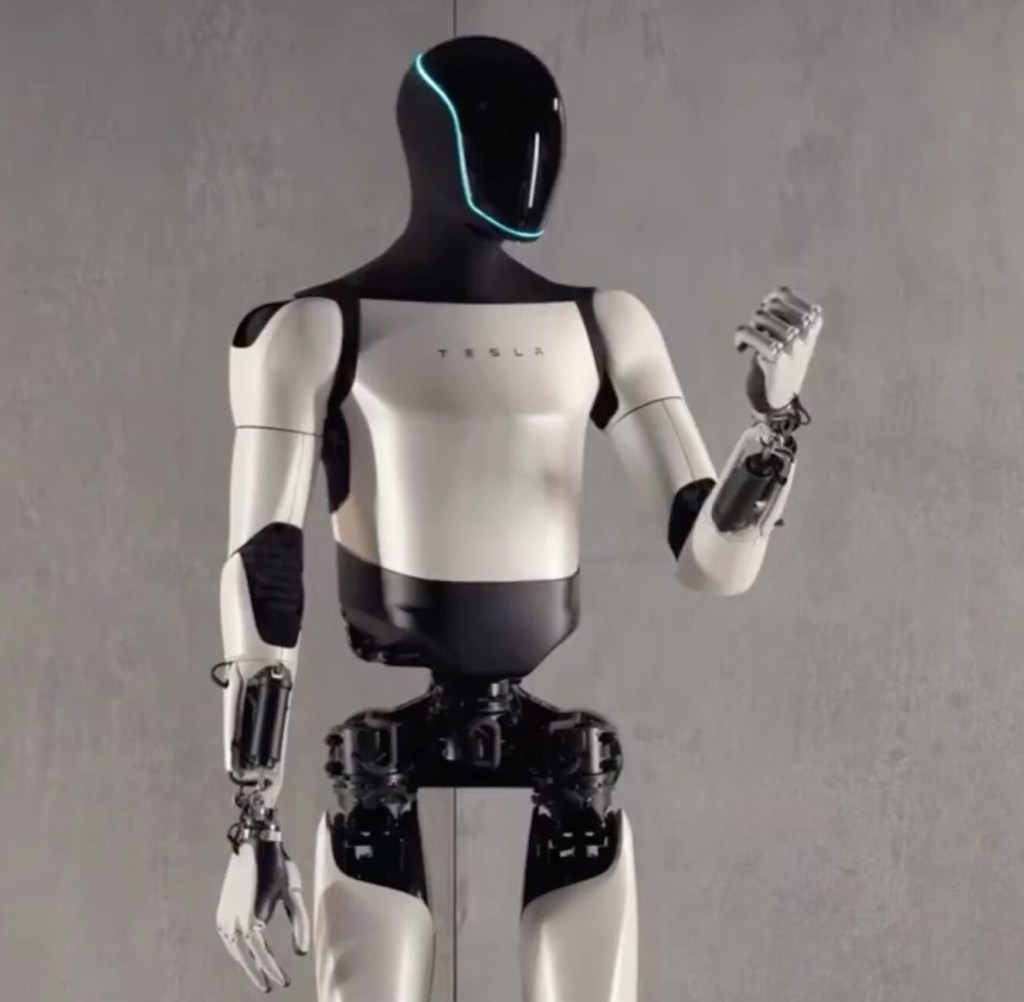
Tesla’s ‘We, Robot’ special event gave us a taste of what to expect from the company—and it isn’t much.
Following Tesla’s presentation that revealed the Cybercab and Robovan, most of the talk was focused on Musk’s unveiling of the updated Optimus project.
It showcased a variety of tasks it can perform, including serving drinks, conversing in different languages and haphazardly walking.
The Optimus Robot Reveal
Last year’s debut consisted of a restricted on-stage performance that didn’t wow many people. Fast forward a year, and we got to see a small contingent of robots walk a red carpet with—once again—further restrictions. But many were quick to point out that there wasn’t anything special being pitched to us.
Most robotics experts agree that Optimus’ skillset is less so than existing models. Will Jackson of Engineered Arts said it’s no different to Honda’s Asimo from 2003, and that it was “decidedly lacking”.
Others chimed in, including professor of robotics Christian Hubicki of Florida State University. He commented that Tesla has obviously increased its capabilities within a year, but it “seems standard (but not mind-blowing) for humanoids.”
You May Also Like: On The Death of Purpose And Artificial Intelligence
Many share concerns about its production timeline, and that its purpose serves as a waste of potential. Musk faces stiff competition from his rivals who are at the forefront of robotics, including Boston Dynamics and start up company Figure, who are both ahead in terms of integrated artificial intelligence.
Musk is a notorious hype man for his presentations, and is now nothing more than a cheerleader. He is renowned for inflating valuations, misrepresenting ideas and skewing manufacturing targets. This isn’t the first time he has failed to deliver, and we suspect it won’t be the last.
Do We Really Need This?
While AI looks to provide an important function for research, its use in performing menial tasks to large scale outputs could serve as a caveat for human purpose.
We have already argued that replacing humans with technology in the arts and other sectors may have a detrimental effect on our well being. And with robotic assistance aiming to aid our day to day duties like cooking, cleaning and more, what will there be left for us? It seems that our identities are under attack if anything.
Pushing the robot agenda onto human life, and with an aggressive move to replace jobs and cull meaning is an advancement without vision.
While the argument for cutting costs works for some, the vast majority of us will not benefit from this robo-revolution. Don’t let the shills convince you otherwise. We don’t need more robots in our life, we need more connections, stories and purpose.
 Stanisland Magazine
Leave a Reply
You must be logged in to post a comment.