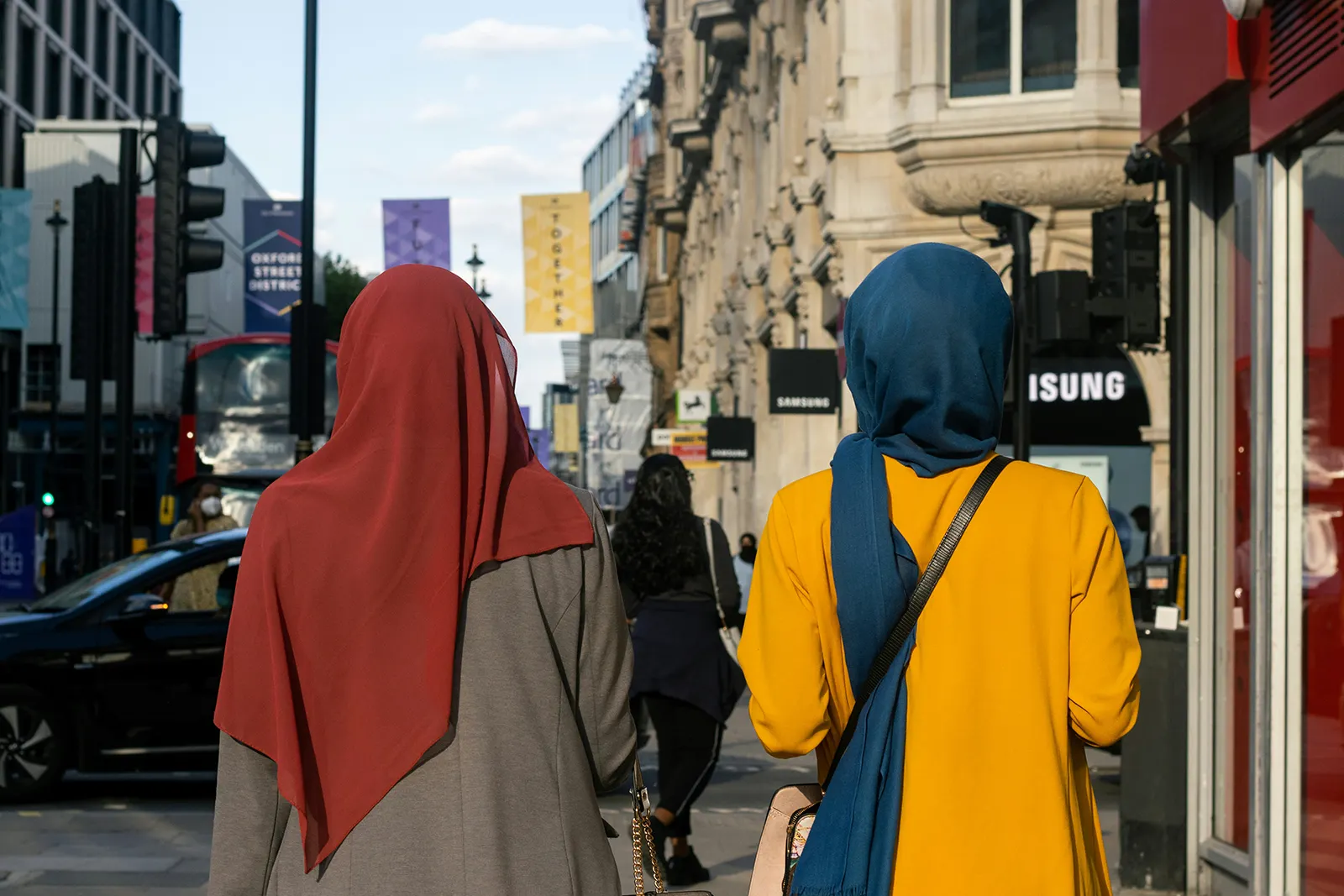
Islamophobia: Muslims make up the majority of reported religious hate crimes in the UK as biased reporting continues to climb
October 7 was three years ago today, and with conflicting accounts of what happened and how those who were kidnapped were treated, Muslims around the world feel — more than ever — like outcasts and targets. While antisemitism is on the rise, the reading of what constitutes antisemitism is often muddled, complicated by misinterpretations and conflations of anti-Zionism, criticism of Israel and anti-Jewish actions.
Islamophobic and Antisemitic Hate Crimes
On the other hand, Islamophobia continues to climb, and has done so since before the October 7 attacks carried out by Hamas, the de facto government in Gaza.
In Britain, hate crime statistics are published by the Home Office, based on police-recorded data. Anti-Muslim hate crimes accounted for 45% of religious hate crimes in the year ending March 2025. In the last five years, recorded anti-Muslim hate crimes have jumped 65.7%, while antisemitic hate crimes have jumped 123.1%. While these percentages may appear to show antisemitism climbing substantially faster, the raw numbers tell a different part of the story, with Muslims targeted in 4,478 religious hate crimes in 2024/25 compared with 2,873 targeting Jewish people.

While the amount of media coverage dedicated to antisemitism and Islamophobia cannot yet be reliably compared, other studies can help us understand how Muslims and Islam are presented to the British public.
Media Bias
The Centre for Media Monitoring (CfMM) conducted a large-scale study of coverage published in 2025, analysing 40,913 articles across 30 major UK news outlets. The report, published in March 2026, found that nearly 50% of articles about Muslims or Islam contained measurable bias — approximately 20,000 articles.
It also found that approximately 70% of articles associated Muslims or Islam with negative aspects or behaviours, while 44% of biased articles contained contextual omissions. Of the publications studied, The Spectator had the highest concentration of severely biased coverage, while GB News, The Daily Telegraph, The Jewish Chronicle, Daily Express, The Sun, Daily Mail and The Times were among the outlets showing the most harmful patterns of reporting.
Journalist and author Peter Oborne commented on the study, saying it’s an “authoritative and fair-minded study” that is a “reminder of the prejudice British Muslims have to endure.” Baroness Sayeeda Warsi said, “Media representations of Muslims are overwhelmingly negative.”
Separately, an earlier CfMM study analysing more than 48,000 online articles and 5,500 television clips found that almost 60% of online articles associated Muslims or Islam with negative aspects or behaviour, while 47% of television clips did the same. More than one in five online articles had terrorism or extremism as their primary focus. The report was authored by Faisal Hanif and published by the Centre for Media Monitoring.
Preventing Partial and Prejudiced News Coverage
IPSO, the UK’s independent regulator for much of the print and digital news industry, recommends adding more contextual information when reporting. It also says editors should avoid “prejudicial or pejorative reference to an individual’s religion” and that publications must “distinguish clearly between comment, conjecture and fact”, as well as include a more diverse range of Muslim voices and take care that images do not create a misleading impression.
The UK government and policymakers also recommend greater education and staff training to help prevent prejudiced language in reporting and inappropriate behaviour in workplaces.
Photo by Danny Lines.

Azealia Banks Makes Surprising Move to Israel After Odd Posts
Azealia Banks moves to Israel following a strange series of social media posts.

UK Government Terror Order Had Strong Influence on Man’s Death
Latest inquest found that 35-year-old Aktar Uddin from East London died after a UK government terror order had a substantial…

Sam Altman Says to “Expect Bad Things” to Develop AI
Sam Altman said he couldn't guarantee that bad things won't happen in the quest for superintelligence and better AI technology.
Leave a Reply