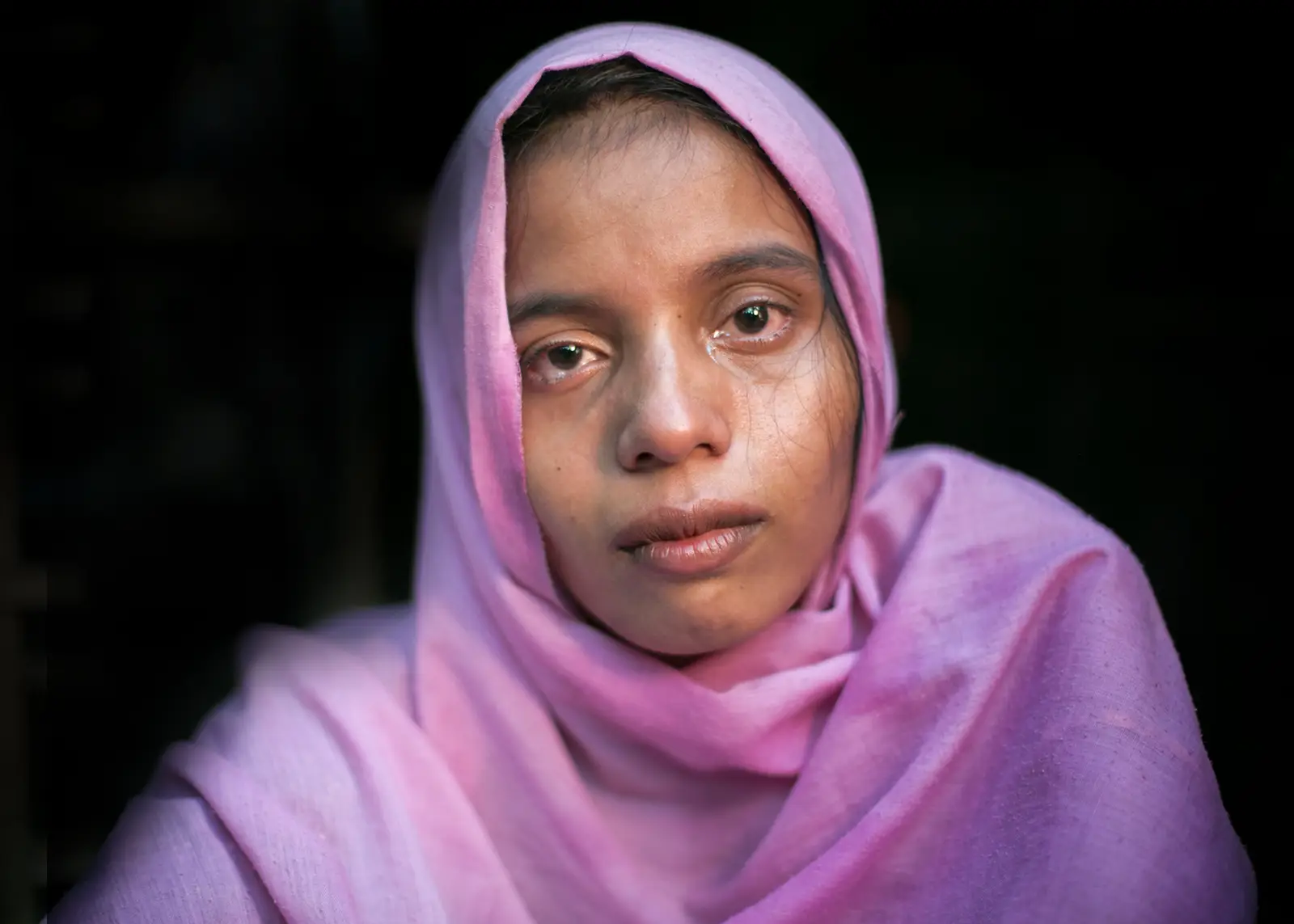
After nearly 50 years of persecution, the Rohingya receive recognition in a new ruling by the UN’s International Court of Justice. But it’s long overdue.
“If I start to tell you what happened, your heart will break.” Those are the words of a Rohingya woman in a Bangladeshi refugee camp, spoken to Marzuki Darusman, chair of the United Nations’ independent fact-finding mission. After nearly 50 years of violence against the Rohingya, the International Court of Justice has only just recognised Myanmar’s 2017 military campaign as genocide, but the damage has been done. Thousands of people have lost their lives; families continue to grieve loved ones, while survivors endure trauma and the memory of murder, sexual assault and untold misery. Genocide has become so easy to commit for the powers that be; while that statement may seem too broad, the evidence is overwhelming. Misinformation has become the weapon of choice for those who commit it, and they steer a column of data and stories that don’t need to make sense — just confuse.

Social media has amplified the course of such tactics: a devastating blossom of tangled webs with a potent venom at the end, making those who cross paths with it turn apathetic. At least 10,000 Rohingya are estimated to have been killed during Myanmar’s 2017 military campaign, but the full death toll is unknown. Their only “crime”? Their ethnic and religious identity.
Reactions
Executive Director of Legal Action Worldwide Antonia Mulvey, whose organisation represented Rohingya witnesses, shares the sentiments of many. In a statement, she said: “Today, the world’s highest court has recognised what the Rohingya have been telling the world for years.”
Lead counsel Arsalan Suleman, who represented The Gambia, the country that brought the case against Myanmar, said: “It’s a great day for international law, for justice, for the Rohingya, for the Gambia,” while Rahama Khatun, a Rohingya survivor living in a refugee camp in Bangladesh, said: “My heart is filled with joy to hear that justice is finally being served.”
Discrimination: A Tool of Delay
In the past thirty years, genocides have taken place across the Middle East, Asia and Africa, raising the question of whether skin tone and belief systems influence whose lives the world chooses to protect. Going just beyond this threshold reveals further patterns of violence, too, as both ethnicity and religious beliefs can diminish hopes for justice, even in a world of widespread coverage.
Rohingya Witness Testimonies
Executions
Witness P2252 told UN investigators that “a soldier put the bullets into his long gun and shot him in the temple”.
Abdul Jabar, 60, told Human Rights Watch (HRW): “[T]hey killed people from the back with machetes and they also fired on them with their guns.”
The Burning of Houses
Witness MN said that the military “came and started firing” and that his house had been “burned down to ash”.
Traps
Witness MS testified that in his village, Tula Toli, the military trapped people and “then they targeted and intentionally started shooting towards the people who gathered in that area”.
Rajuma Khatoum, 35, told HRW: “The soldiers separated the men from the women and the children.”
Systematic Killings
Witness NJ described an attack on Chut Pyin: “I could see the military personnel moving door to door.”
The same witness said she and her husband had to sign a document restricting the number of children they could have: “we cannot [have] more than two children”.
Only recently, after years of deliberation, did the UN declare that Myanmar’s killing of the Rohingya people was, in fact, long a genocide. Sudan, Uyghurs and Gaza continue to suffer the same fate following thousands of lives taken through murder and slaughter, dehumanised by the upper hand and unwilling onlookers. How long do they have to wait until the same so-called justice arrives? The numbers speak for themselves: approximately 400,000, 74,000, and unknown numbers, respectively.
It’s this confusion that turns the certain into dejected zombies of decision-making. This makes the lives of politicians easier, as they can look away from the balconies of their ivory towers into realms devoid of chaos and warfare. Bureaucracy is the comfort blanket, whether they’re unwittingly cosying up inside it or not.
It turns their attention to anywhere but the killing room, with problems requiring little energy to solve being given care and consideration. Parking issues, a new shopping centre opening, a bus route salvaged from being purged — anything to look away and say “not my problem”.
Besieged by a relentless enemy, endowed with fear and adversity, absorbed by the hopelessness dispensed by the outside world, victims face a genocide that is still a problem — but seemingly not for the West. Only when we look inside our own strongholds and economic zones of enrichment will we find the motivation to bring about change. But not anyone else.
Photo: Saahmadbulbul
Sources: UN Fact-finding mission statement | Legal Action Worldwide’s statement | Human Rights Watch on Maung Nu | ICJ ruling

Climate Change: COP31 Delivered Another Feast of Failure
COP31 and beyond will always be a failure. The proof is in the pudding.

GTA VI: Surprisingly Odd Reactions to the Relationship with Lucia
The new Grand Theft Auto VI sees some players fume at being nice to their in-game girlfriend.

Danny Tommo Jailed for 15 Months for Slashing Dinghy at Sea
Far-right agitator Danny “Tommo” Thomas was accused of a premeditated attack, which the judge believed required a high-degree of planning
Leave a Reply