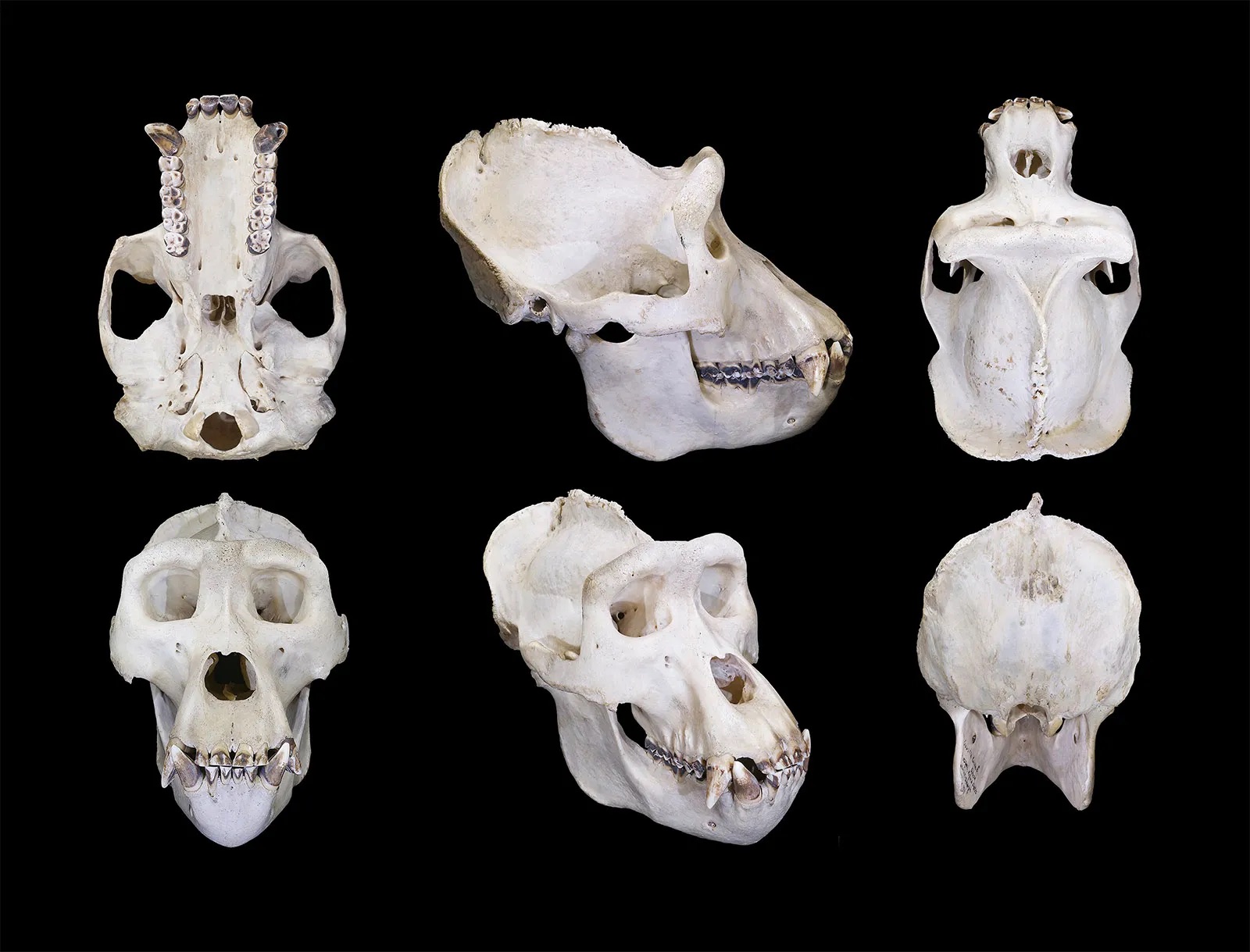
The US Forest Service has released several documents relating to the phenomenon known as Bigfoot.
Bigfoot occupies a place in society alongside UFOs, aliens and the paranormal. But you’ll be surprised to know that the US Forest Service recently released new files regarding the phenomenon. Sasquatch has long been the subject of speculation undergoing several iterations of ridicule and embrace thanks to entertainment adaptations and sceptical analysis. Now, newly released Bigfoot files aim to put it under the spotlight again — but will this bring new research to the fore or dampen its credibility once more?

What’s in the files?
From footprints to witness testimony, there’s a ripple in the water here as the US government moved to release files relating to the suspected tall, large and hairy creature. Sceptics, however, still doubt its existence, while believers gravitate towards curiosity as the middle ground is trodden by the authorities for those on the fence.
One of the reports cites a 1982 discovery of footprints in Oregon, analysed by wildlife biologist Rodney Johnson, who says the markings would have been “very hard to duplicate”. However, he ultimately questioned their authenticity, concluding that they “were made by something other than a 300 pound plus two footed being”, noting inconsistencies in the skin creases.
Another report contains historical testimony of an elk carcass allegedly being carried off by an unknown creature. The incident occurred in 1949, so follow-up questioning would be a thin interrogation.
However, in 1982, Paul Freeman, a Forest Service watershed patrolman with access to restricted areas, claimed to have spotted a nearly eight-foot-tall creature. He described it as human-like in appearance, bipedal and with reddish-brown hair.
Later, in 2003, a man called Bob Mesing, who examined hundreds of footprints, said in conclusion of his analysis, “If someone played a hoax, they did a pretty good job.” This and more account for numerous pieces of anecdotal and alleged physical evidence, which can be found both in the newly released files and in the hands of researchers.
Does Bigfoot exist?
While no definitive evidence exists, people swear by their experiences, including first-hand sightings and video footage. Its mythology has even spawned several successful television shows and online forums, as well as books and media. But much of this sits to the wayside of those who actually witnessed or came across something of note.
While its existence is still up for debate, there are several cooler heads that prevail on the topic. Talking to NPR in 2002, primatologist Jane Goodall said, “Now you’ll be amazed when I tell you that I’m sure that they exist. I’ve talked to so many Native Americans who have all described the same sounds, two who have seen them.” Speaking to KUOW in 2017, Goodall said she asked a local tribe in Ecuador about a “monkey without a tail”, to which they responded that they had seen an upright creature measuring approximately 6–8ft tall.

Some field specialists and researchers will remain open to theories until further evidence emerges. Discounting reports too early can work against their curiosity, limiting their motivation and creativity in exploring ideas if they were to shut down everything without evidence.
We’re consistently discovering new species that we had no idea existed before; this isn’t a once-a-decade happening, but an annual occurrence.
In 2017, biologists identified the Tapanuli orangutan, a large Indonesian ape, as a distinct species, and in the Amazon, the Groves’ titi monkey was described the following year. More recently, in 2026, the Likweli colobus monkey was formally identified as a new species in the Democratic Republic of the Congo.
These discoveries are made all over the world and give credibility to theories that additional or peripheral species of mammals, including apes and monkeys, can exist, even in plain sight. Some of these species have been known to locals for many years, yet their knowledge may be overlooked. The same may apply to Bigfoot sightings in the United States, where some Native American communities have passed down accounts of similar creatures for generations.
People who live closer to where sightings are made tend to have a better chance of reporting them, too. So, rather than shrugging it off, perhaps more resources should be allocated and longer expeditions planned in the North American wilderness, with better technology and curious minds to snare an understanding of whether it does or doesn’t exist.

Conspiracy Theories End 1 in 5 Relationships, New Study Says
A new study by researchers from the University of Kent and the Slovak Academy of Sciences found that couples had…

This Weird Mushroom Makes People See Tiny Humans
This mushroom found in Asia contains no known psychedelics but causes people to hallucinate tiny humans.

Fascinating Study Found Ovulation May Influence Higher Tips
A 2007 study found strippers were more likely to earn higher tips during the fertile stage of their cycle
Leave a Reply