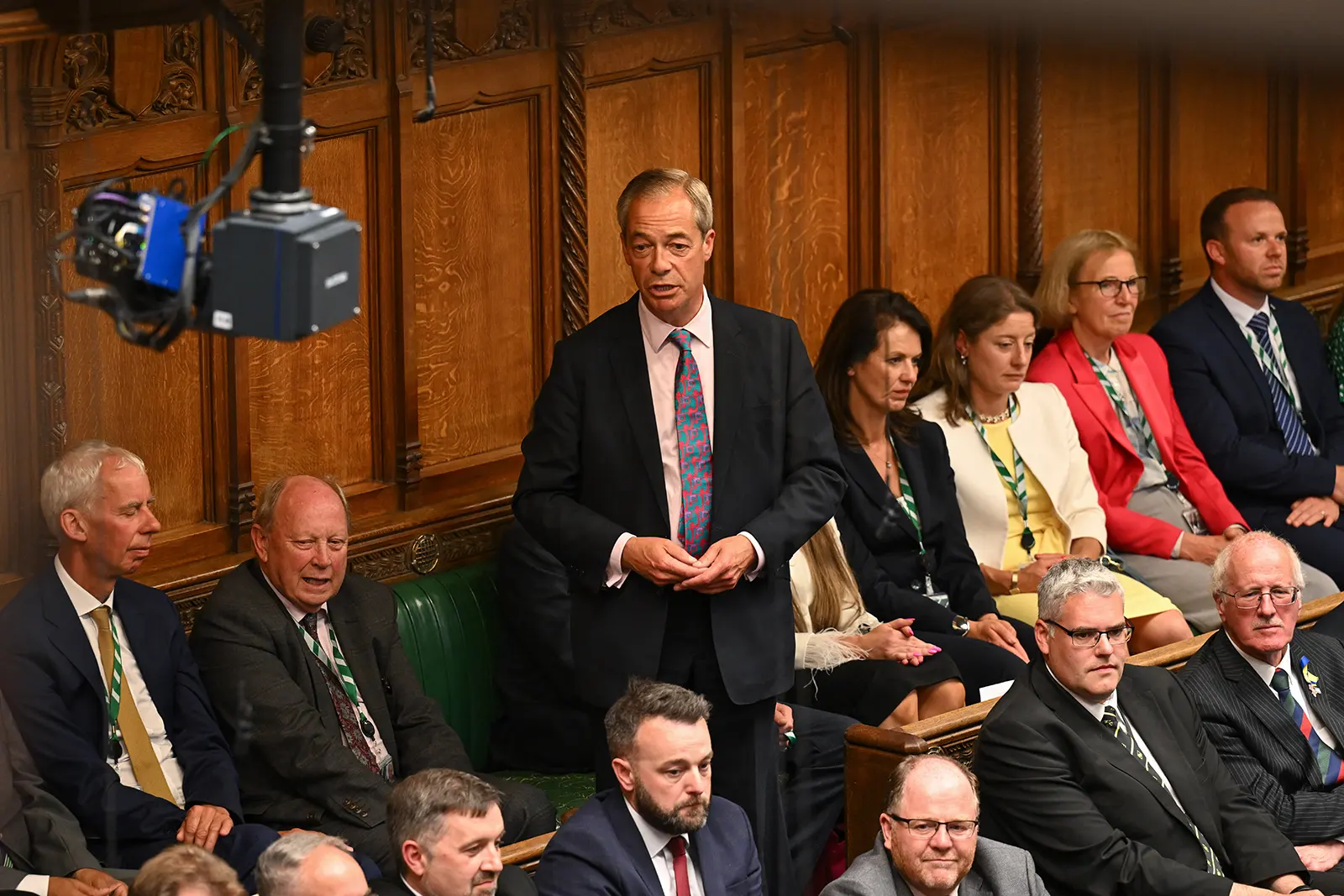
Farage and Lowe’s anti-Muslim rhetoric is based more on personal prejudices than on a factual basis
Both Restore and Reform UK’s policies are a muddled and confusing bag of hot air, featuring an inflammatory and tabloid-esque stance designed to trigger Britons without context and led by prejudiced anecdotes.

They believe the BBC is “left-wing,” but that is owing entirely to the fact that both parties are so far-right that they make right-wing media look left-leaning. But the problem in the kitchen isn’t that there are too many cooks: two parties, one marginalised and the other with a now-dwindling presence, have skewed the reality of what Islam is to the point that even their activists regularly slip up.
On 26 May 2024, Nigel Farage told Sky News that he felt a growing number of young people didn’t share the values of other Britons. He was subsequently challenged by presenter Trevor Phillips, an equally Islamophobic figure, to clarify whether he meant British Muslims. However, Nigel Farage has never specified what he believes British values are.

The Government makes clear what they are, including: “democracy, the rule of law, individual liberty, and mutual respect and tolerance of those with different faiths and beliefs.” It’s debatable if Farage believes in these at all, especially the very last one, given his aversion to public Muslim prayers.
Christianity, despite lower numbers due to an increase in atheism, remains the largest religion in the UK. Muslims constituted 6.5% of the population, a figure that has only grown slightly.
Rupert Lowe takes a more extreme approach and claims that Islamification is taking place and that religious justice systems run “parallel” to British law, despite little evidence, if any, to suggest this is the case. These courts, commonly referred to as ‘Sharia Law’ — which is inaccurate because Sharia literally translates as ‘law’, meaning the interpretation is read as ‘law law’ — have no legal jurisdiction in the UK, and any courts operating privately would find it hard to work in a landscape where alternative practices are made difficult.
“Over the last year the most marked trend has been an increase in cases where extremist versions of anti-immigration and anti-Muslim grievance are tipping into terrorist intent.” – Ken McCallum, Director-General of MI5, 13 October 2026.
The other issue that remains is the threat of so-called Islamic “terror”, a term that often provokes and conflates Islam with terrorism, and is an outdated term. That aside, extremism is made up more of far-right and politically aligned terrorism than religiously motivated terror. Even then, terrorism described as Islam-inspired is often motivated more by foreign policy grievances than by personal beliefs, something both researchers and British intelligence assessments have identified as a major driver of radicalisation.
What To Do
Firstly, a major societal shift can occur when the terminology is adjusted within the discourse, particularly in the media. Switching “Islamism” out for “extremist ideologies” would fit the purpose better. No one ever calls settler violence Judaist, or Christian extremism Christianist — when highlighting these prejudices, the pattern becomes clearer in the debate involving Muslims, and why media outlets seeking a juicy story gravitate towards such terms.
The apparatus to access statistical outcomes must be more user-friendly and presented more often to counter assumptions and cherry-picking motives. More religious hate crimes are recorded against Muslims than any other religious group in England and Wales, and these statistics are rarely covered in any form of news media, making representation a key goal for any plan the British government may have to counter Islamophobia.

MI5’s Latest Warning Raises Concern of Far-Right Attacks
MI5’s top spy, Sir Ken McCallum, has warned that an attack is highly likely from extremists, including the far right.

Brexit: New EU Referendum Will See Russia Prey on a Vulnerable UK Society
Russia will be licking its lips at the prospect of another EU referendum, and Britain is not ready

Yes, British Values Are Dying, Thanks to Mainstream Social Media
So-called patriots talk of “British values”, and the so-called liberals are starting to sound just like them.
Leave a Reply