
Call 999, the hip-hop game is about to experience warm weather and fires of a natural, wordplay kind
Nine Levels keeps dousing the hip-hop game with lighter fluid, checking in and checking out as he pleases, with a moreish quantity of style that anyone can bop their head to.

The Edmonton, London-based wordsmith recently dropped his explosive new EP, Buy Now, Cry Later, a follow-up to his introductory short play, Parts Unknown, and he’s just getting started.
There’s an emergency that must be dealt with. Copycat rappers are marching en masse, deliberately riding the styles of others, like some sort of brainless Westside Gunn flash rap mob. But fear not, we still have some juice in the UK rap tank, and one of hip-hop’s unsung heroes is about to blow. But enough talk — introducing you to your next favourite rapper….
Where did the name Nine Levels come from?
“Haha this name actually came around the time I was in year 6 or 7, one of my friends from school had an email account with Nine Levels as the name of it and I just took it from there and kept it ever since. I started producing around that time so it was more of a producer name until I started writing/rapping when I was older.”

How did you find your style ?
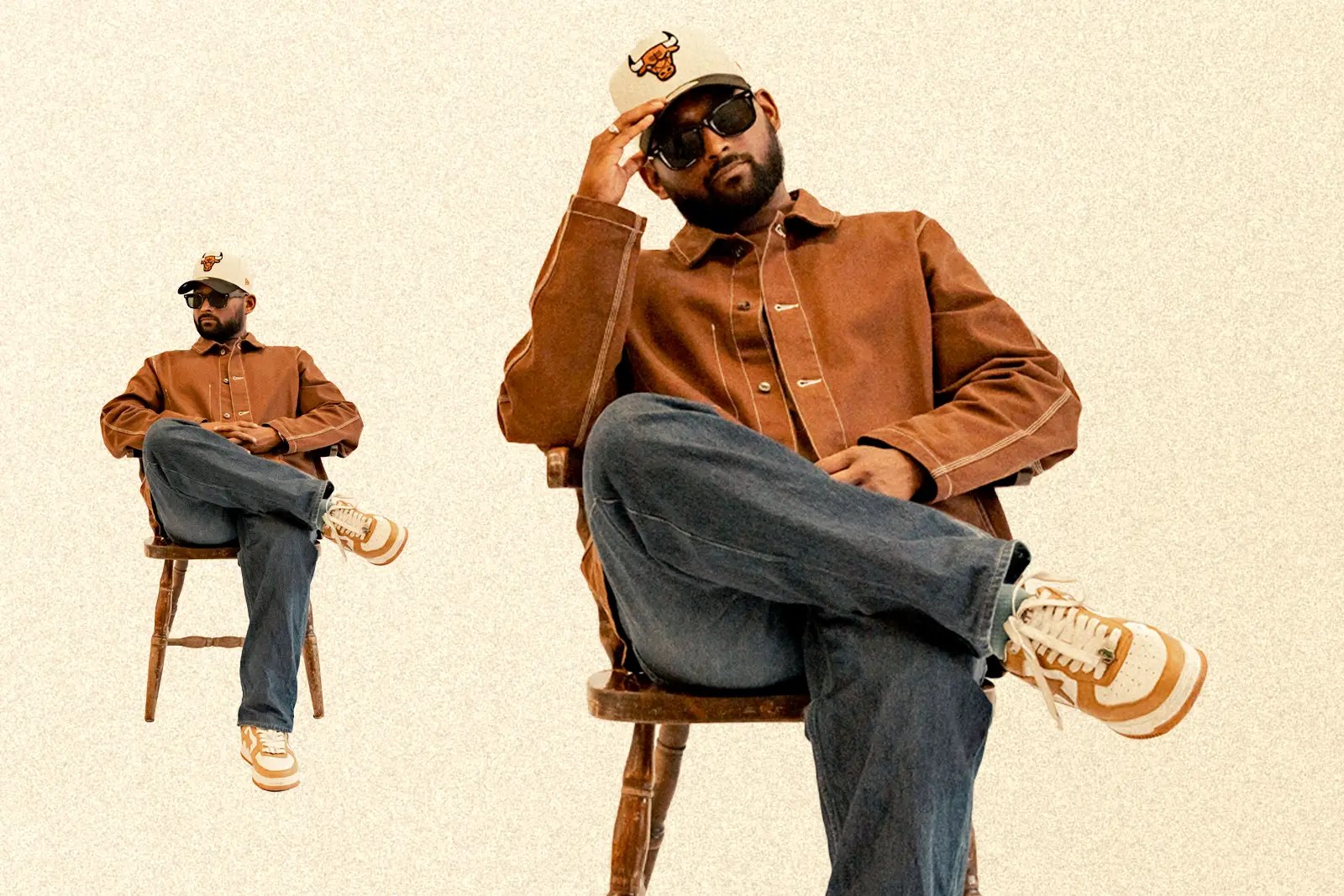
“Not sure to be honest, I have had a lot of influences from different places either local or international. A lot of my style is rooted in hip hop and grime, both from the UK, France and America especially. Mainly from influences in media and the internet, friends in North London or what my parents or cousins listened to which was a rich mix of Tamil music, dancehall, Rnb, Afrobeat and 80’s disco/pop. As I got older I started appreciating these things a lot more, but my inspiration still roots within Hip Hop from most major regions in America such as New York, LA and the South. I guess my style developed through honing in on these influences and adding my story/flavour to it, which is still evolving. A lot of my musical inspirations in rap are Jay Z, Lil Wayne, Nas, Skepta, Kanye, Dr Dre. Also loved Soulja Boy growing up, he’s the reason why I wear bapes to this day!”
You’ve released two stellar EPs; how would you describe them to the uninitiated?
“Parts Unknown would be a small glimpse into both my musical sensibilities and pivotal moments in my life, both in growing up, the relationships with my friends and family and experiences in my area. A lot revolves around my aspirations, struggles both financially and with family growing up. Also it touches on my obsessions with money and its impact on me.
Buy Now, Cry Later hones in even more on these observations especially on my relationship with money, consumption and ego. This is also framed within my observations on society and my place in it and how it impacts areas from culture, politics, art and society. I highlight my own hypocrisy within it all, as a partaker and victim of a lot of these things, and how much I have been indoctrinated within the culture of money and consumption. The production is also pretty jazzy and rooted in more traditional sample-based hip hop.”
Your latest work, Edmonton, is a tribute to where you live. How has the area shaped your sound?
“A lot of my stories revolve around experiences growing up in Edmonton, and neighbouring areas such as Tottenham and Wood Green. I grew up being deep into hip hop, which is what a lot of my friends in my estate and surrounding areas listened to. Many of them were involved in music as a hobby in some capacity. We spent a lot of time sitting around the family computer and making beats to upload on Myspace and/or freestyling over beats. It’s also a very multicultural area, so you learn a lot about other communities, religions, food and of course their music. These all had an impact on us, even down to the slang we used. These parts of North London are also a hub for Grime music. Boy Better Know, Scorcher, Wretch 32 to name a few were big influences on us, and Black the Ripper (who is sampled in the chorus) is a local legend from N18, RIP.”

Are your collaborators also local?
“It’s a mix, but quite a few are from North London. Jaina Parmar, who designed much of the campaign and visual designs for Buy Now, Cry Later is a North London native. Surya Sen, who’s also grown up near me, prepared the production for Edmonton. He’s a wizard, shout out to him! There are more, including Ilxnsei who featured on my EP for Buy Now, Cry Later.”
How much has your writing style changed since you began rapping, and how different was it when you started?
“It’s changed a lot. I started rapping at 15 and at the time I think I was just imitating what I thought rappers should rap about, with more focus on production. The writing didn’t come naturally. It took me a while to figure out what I even wanted to talk about and make it somewhat interesting, and nice to listen to. I didn’t want to be boring (at least I hope I’m not), which is the biggest crime you can commit as an artist in my opinion. I also felt like I couldn’t really express myself in school as much. It was a state school on the other side of Enfield and in many ways I couldn’t relate to many of the kids there. Most of them didn’t live in Edmonton or similar neighbourhoods and I would hide these aspects of myself most of the time, especially on a class level. It gave more reason not to write about my life at the time; however, I think I grew other influences and had unique experiences that I wouldn’t have had attending school more locally.
As I matured as an adult I felt more confident in my identity, lyrics and story, and picking the right production too which is just as important. My style became more observational and reflective over time. I also feel my story, which is uniquely British Tamil too as my parents are from Jaffna, Sri Lanka. My Tamil identity especially can be articulated best in my writing and expression compared to the production choices I make in my music. I try to strike a balance between some of the simpler pleasures in my life and some more cerebral ones too.”

Do you see yourself releasing an album?
“Yes definitely, I plan to do another EP first but an album is definitely be on the cards.”
Your work includes references to your family; how do they react to your music?
“Haha they make fleeting comments here and there but they are proud of me and what I do. My sisters and dad especially. I have cousins in Paris too, they’ve loved my music from the jump.”
Are there any other artists in your family?
“Not within music as far as I’m aware, but my sister is a jewellery designer and creates her own jewellery. Many of my friends have gotten their wedding rings done by her. One of my uncles was a DJ. My dad’s always been into music, especially sound – there were always speakers in the house. I’d hate to be his neighbour though.”

What pastimes do you pursue other than hip-hop?
“I’m a big football fan. Arsenal is my favourite club. Next to that, I also like to read, play badminton, steam trains are dope (check out the National Railway Museum in York), hang out with my friends, go to music events and I like cooking. I also love spending time with my girlfriend too.”
How has music changed you?
“Honestly, not sure. I think it feels good to create music which I find really enjoyable. I have also met some amazing and interesting people through music, some now dear friends. I have also found through listening to music a way to understand and recognise my emotions. Also have had some amazing times with friends through music, such as going out, hanging out, etc. There’s great (and some not so great) memories locked into songs that always remind me of certain times in my life. You also get a stronger understanding of history and politics too when you study certain musical eras and genres.”
What effect has hip-hop had on your everyday life?
“It’s beyond words. I think it runs through me really. It’s shaped my politics, my dress sense, my sense of expression and even aspirations. The points of reference you can only get in certain songs are incredible and endless. It’s expanded my musical palate through the samples used in its history. The roots and communities it’s birthed and given a vessel of self-expression for have now become a global phenomenon. We, however, can’t forget where it came from and where its cultural roots belong to. Considering my background as a Tamil kid from North London, being inspired and influenced by an art form birthed and cultivated by Black communities across New York and beyond is something that I will always appreciate and reflect on a lot, and maintain a relationship with it that I hope comes across as authentic to others as it feels to me. I don’t think a day goes by where I don’t think about hip hop in some way.
One thing, however, that I have struggled with is the place that misogyny plays in mainstream hip-hop especially, and should be scrutinised intensely as a thorn within hip-hop’s backside.”
Follow Nine Levels
Photos: Rada

“Bandit”: EsDeeKid’s New Track Maintains Style but Lacks Momentum
Liverpool rapper EsDeeKid continues his UK rap run, but short-form content is his Achilles’ heel.

Chy Cartier’s Smash New UK Rap Anthem ‘Race’ Sends Warning
UK rapper Chy Cartier once again revises hip-hop new song, ‘Race’.

Eerf Evil’s New Track “Son of Pearl” Tackles a Nightmare World
Rapper Eerf Evil documents the outcomes of marginalisation and youth culture on “Son of Pearl.”
Leave a Reply