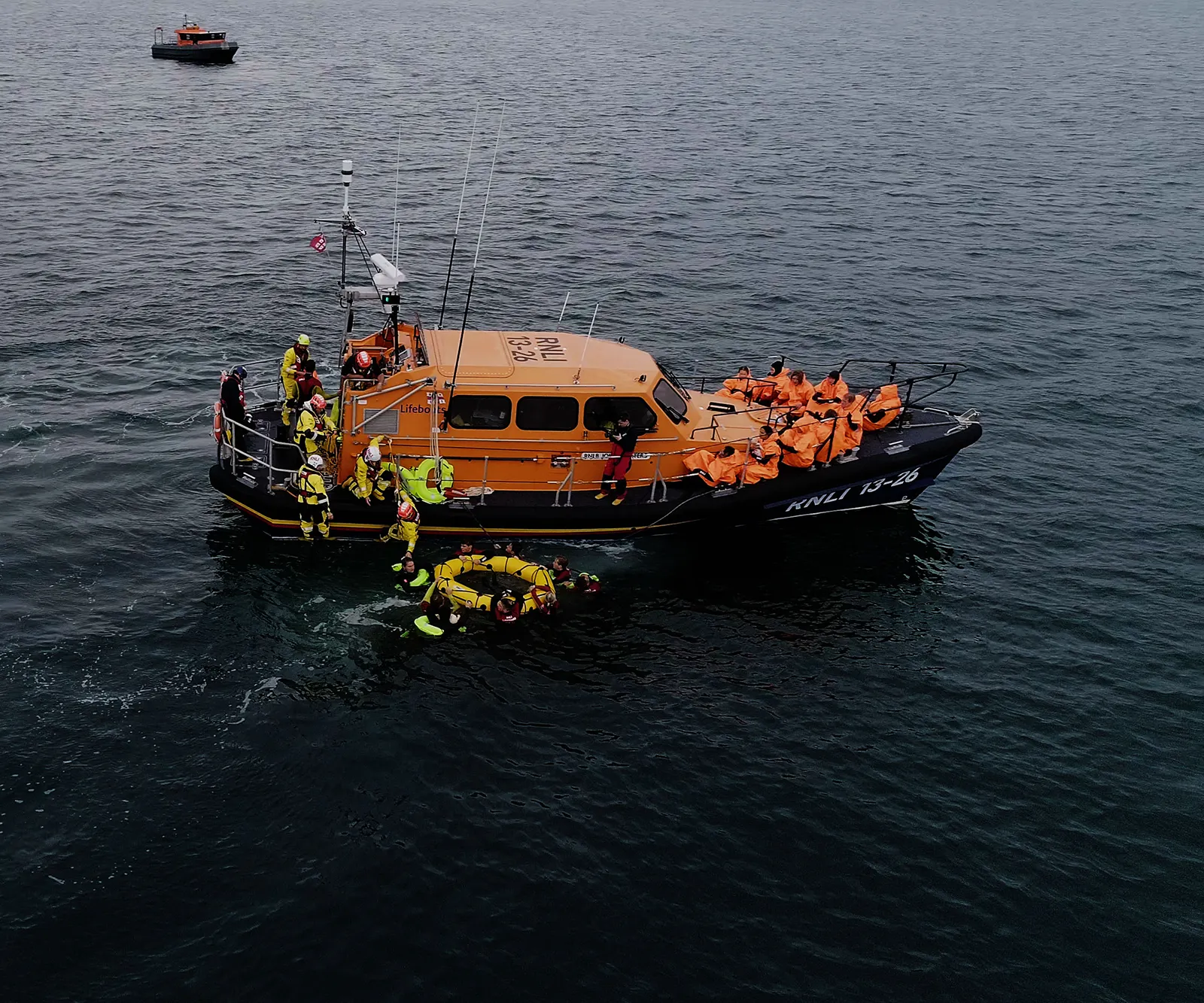
“Stop the Boats” campaigners claim the government isn’t doing anything to stop illegal migration, but official figures say otherwise
Updated: 17 September 2026
With balaclava-wearing groups roving the country with no real plan other than to smash cars and stress police units, their main cause seems to be a blend of xenophobia and loneliness. Its organiser is Danny Thomas, who claims the masks are used to conceal their identities, believing they will be targeted by the left.

However, the same can be said for its opposition, yet they are balaclava-less, warranting scrutiny of their beliefs and suggesting that perhaps it’s less to do with concealment and more to do with shame. Below, we fact-check and answer your questions on the scale of small-boat crossings and why they happen.
Are boat crossings going down?
Yes. The latest government statistics show that small-boat crossings are now down by 43% to 17,138.
What are the small-boat crossing figures by year?
- 2018: 299
- 2019: 1,843
- 2020: 8,462
- 2021: 28,526
- 2022: 45,755 (record high)
- 2023: 29,437 (down 36%)
- 2024: 36,816 (up 25%)
- 2025: 41,472 (up 13%)
- 2026 so far, to 6 September: 17,138 (down 43%)
Where are people travelling from?
As of June 2026, the five largest nationalities from small-boat arrivals are:
- Eritrea: 18% (5,875 people)
- Sudan: 13% (about 4,191)
- Afghanistan: (13%)
- Somalia: (12%, about 3,901)
- Iran: (11%)
Why are they fleeing their countries?
Eritrea
Eritrea is an extremely authoritarian state and is home to some of the severest restrictions in the world, including political repression and compulsory national service. Human Rights Watch said: “The Eritrean government maintained an iron grip on its population at home and abroad.” Year on year, Eritreans have been one of the largest groups applying for asylum in the UK.
Sudan
Since the start of the civil war between the Sudanese Armed Forces and the Rapid Support Forces, the country has experienced mass atrocities and human rights violations. The UNHCR says more than 14 million people have been displaced from their homes since the war began. Maria Stavropoulou, UNHCR Representative in Greece said, “People did not flee for opportunity. They fled because survival left them no choice.”
Afghanistan
Since the invasion of Afghanistan in 2001 by coalition forces including the United States and the United Kingdom, Afghan people have been forced to flee their homes due to persecution and violence. Coalition forces occupied major cities, including Kabul, and key areas of Helmand Province; the Taliban controlled much of the country outside key areas and, over the years, regrouped, ultimately returning to power following the withdrawal of Western forces from the country in August 2021.

Somalia
After decades of war and national security issues, Somalia has consistently remained on the verge of collapse. This has not been helped by regional instability caused by terror groups, notably Al-Shabaab, as well as climate change. Plagued by both drought and flooding, millions have been internally displaced due to food and water insecurity, which led the UNHCR to describe the situation as a “conflict- and drought-driven emergency.”
Iran
After years of crippling sanctions and now conflict with Israel and the United States, Iranians are beginning to flee the country with seemingly no way back to normality. This has been compounded by decades of political repression. Amnesty remarked that the country’s population is “trapped between unlawful US and Israeli attacks and deadly domestic repression.”
Albanian Numbers Decline
Interestingly, in 2022, Albanians were the largest group arriving in the UK by small-boat. However, the UK-Albania returns agreement saw these numbers collapse.
The Asylum Process
As of July 2026, the government said that “79,589 were granted asylum or some other protection status and 53,305 were refused”. When asylum seekers reach the country, they can immediately claim asylum, but they undergo a long and arduous process before a decision is made on their status.

They’re generally not eligible to work, which means they rely on state benefits of approximately £49.18 per week (approx. £7 per day) until they’re legally permitted to work. The Refugee Council said that “people seeking asylum receive little financial support and are not allowed to work.”
Most asylum seekers can enrol in ESL (English as a second language) classes, develop skills for prospective employment or volunteer; it’s an impoverished life while each person awaits a decision on their application, with many effectively facing persecution or death if they return to the countries they fled.
Takeaways and Tommy Robinson’s Contradictions
Tommy Robinson has claimed in several interviews that the issue is illegal immigration. However, in a 2024 interview, Podcast host Dr Drew Pinksy pointed out that they were legal immigrants. At that point, Robinson (real name Stephen Yaxley-Lennon) pivoted to anti-Islam sentiments and proved that his argument is a fractured mix of unintelligible statements and motives.
Robinson’s rationale consistently shifts and contradicts itself, with many of his ideas changing at a pace driven by emotion rather than fact. As you have already read, Robinson said the Port of Dover disruption was led by protesters who oppose the “invasion of our country by illegal fighting age men”; that claim falls apart when we see just how much small-boat crossings have dropped.

The Colossal Hack of Jared Kushner: Is It True?
Journalist Matthew Cole claims Donald Trump’s son-in-law, Jared Kushner, paid warlords and hitmen. Here’s what you need to know.

Opinion: David Bell’s New Antisemitism Report Undermines Palestinian Equality
The 107-page report commissioned by the government recommends measures to rightly protect Jewish pupils, but will it empower Israeli nationalism…

Pokémon Frenzy As a New London Store Gets Green Light
Pokémon Company CEO releases statement on what fans can expect from the latest store
Leave a Reply