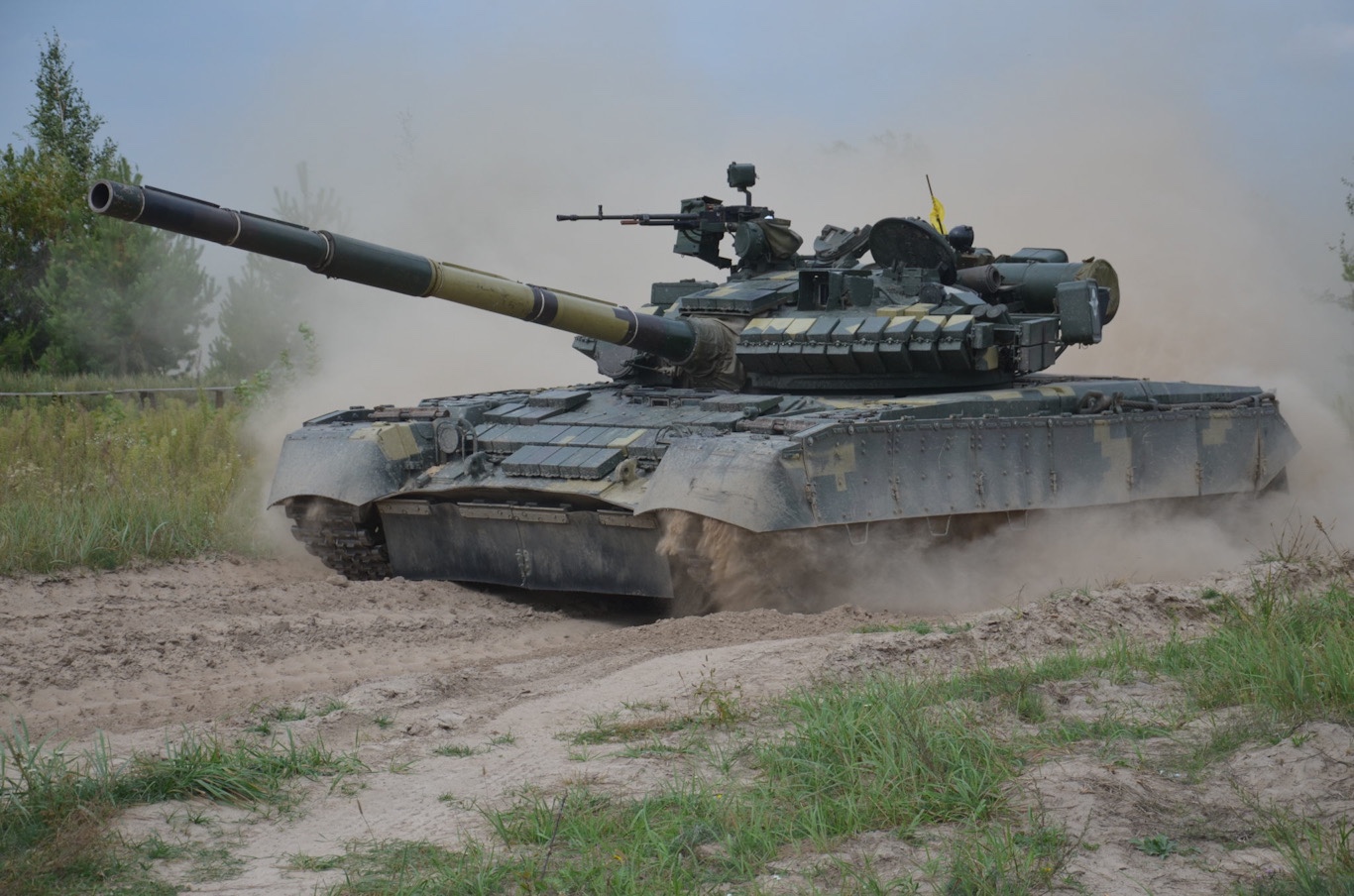
Ukraine’s military will receive a shipment of depleted uranium munitions from the United States later this year.
Following in the United Kingdom’s footsteps, the United States says it will send depleted uranium (DU) rounds to Ukraine to arm M1A1 Abrams tanks due for dispatch later this year.
The move has caused additional friction between the West and Russia, who say it is an “indicator of inhumanity”. It has been included in another military package worth $175 million and was announced by the Secretary of State, Anthony Blinken.
What are depleted uranium rounds?
Depleted uranium is primarily used as anti-tank rounds and are a by product from the enrichment of uranium largely for nuclear weapons.
As their name suggests, they’re predominantly void of radioactive material, though they still carry a residual trail.
This means they’re unable to create a nuclear reaction, but their use still poses much risk according to the United Nations.
How does depleted uranium work?
In this case, they’re armed upon 120mm shells. From their launch, they begin to heat, burning away at the edges. This essentially makes them a self sharpening projectile, making it easier to penetrate most vehicles.
Because of this, they’re a preferred armour piercing munition due to the extended damage it can cause.
Is there a public health risk?
According to the United Nations, DU rounds should be handled as little as possible. This is because they carry trace amounts of radioactive matter.
The International Atomic Agency (IAA) says contact should be kept short and if handling DU ready equipment, appropriate “apparel (gloves) should be worn”, adding that a “public information campaign may, therefore, be required to ensure that people avoid handling the projectiles.”
Is there an environmental risk?
Based on current research, the IAA says they have concluded DU particles settle after a short period of time. They have also said that they increase in size, meaning they become less of a hazard, as they’re less likely to be inhaled.
Particles can be carried by the wind for a small distance, but they’re unconcerned with an increased risk due to it.
The Campaign for Nuclear Disarmament (CND) has refuted these claims saying “…the impact of their use causes toxic or radioactive dust to be released and if this is subsequently inhaled or ingested in other ways, it has very significant negative health consequences.”
Others agree with this assertion, having found long lasting effects in the fact that DU is a carcinogenic material.
What has Russia said about the move?
Russia has obviously opposed the move, adding that: “It (the US) is fully aware of the consequences: explosions of such munitions result in the formation of a moving radioactive cloud. Small particles of uranium settle in the respiratory tract, lungs, esophagus, accumulate in kidneys and liver, cause cancer and lead to the inhibition of the whole organism’s functions.”
Bottom line
There is conflicting evidence on whether depleted uranium is of risk to public health. Though, given it is a carcinogenic material, it could be the connection cannot be made until long after the fact.
Despite this, its inflammatory usage, and origin, means anyone working with it should proceed with caution.

Nas & Mamdani Talk Hip-Hop and New York in Sit-Down Interview
Mayor Zohran Mamdani and rapper Nas talk about the past, present, and future of hip-hop.

Chinese Espionage: MI5 Issues Instructive Warning to Universities
UK security agency MI5 has issued a warning to universities following a plot by China’s MSS to steal research.

Startling Footage Shows Danny Tommo Slashing Dinghy at Sea
The far-right activist and frontman of ‘Patriot Platform’ continues to antagonise rescue workers with a belligerent motive
Leave a Reply